Billing per session: length and type matter
Physiotherapists charge per appointment, and the price depends on its type and length. An initial assessment takes longer and costs more than a follow-up. A 30 minute follow-up and a 45 minute follow-up are different services, so write the minutes into the line rather than calling everything “treatment”.
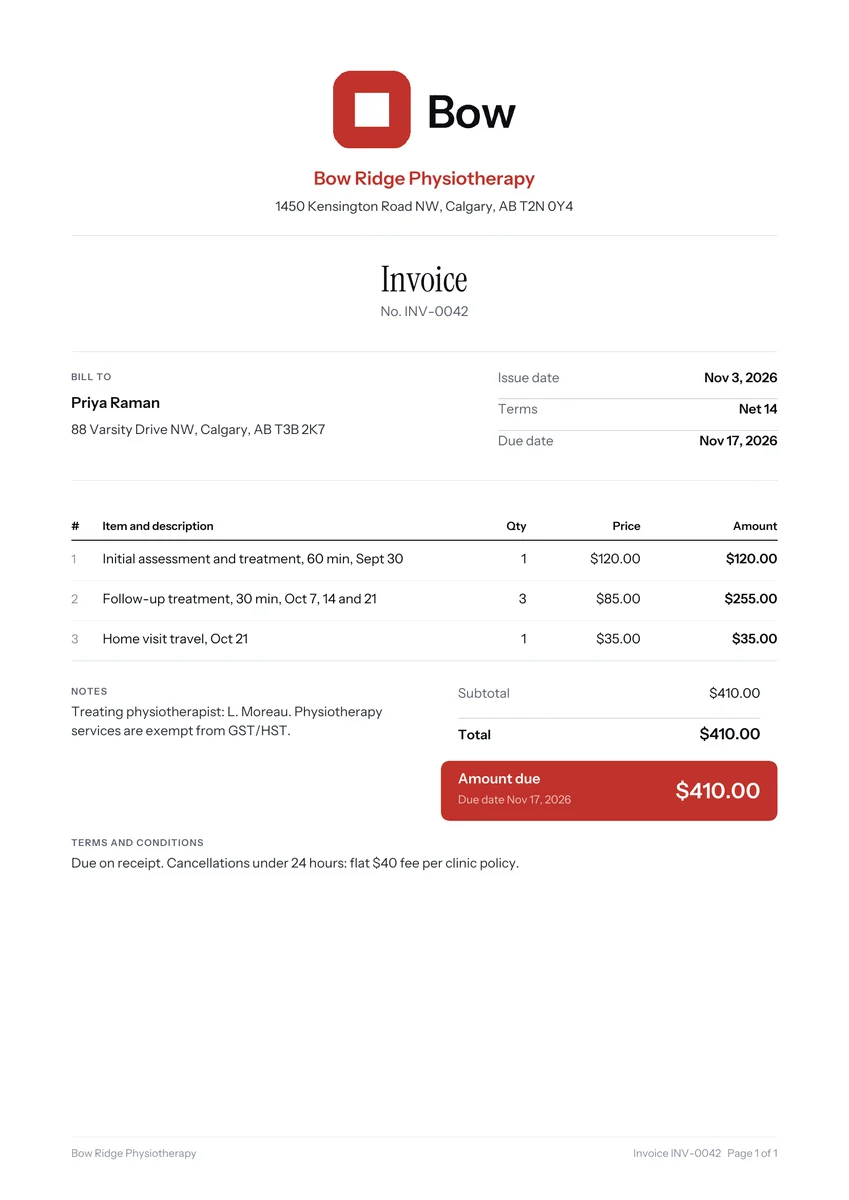
When one invoice covers several visits, list each date on its own line or group identical sessions with the dates in the description: “Follow-up, 30 min, Oct 7, 14 and 21” with a quantity of 3. Either way the patient can check the count against their own calendar.
Example lines on a physio invoice
The lines below show common appointment types and how each is counted. The fees are examples in Canadian dollars to show the format only. Your clinic’s posted fee schedule sets the real figures, and the description on the invoice should use the same names as that schedule.
| Service | Unit | Example fee (CAD) |
|---|---|---|
| Initial assessment and treatment, 60 min | Per visit | $120 |
| Follow-up treatment, 30 min | Per visit | $85 |
| Follow-up treatment, 45 min | Per visit | $105 |
| Home visit travel | Flat per visit | $35 |
| Package of 6 follow-ups, prepaid | Per package | $480 |
| Late cancellation, under 24 hours | Flat fee, per clinic policy | $40 |
GST/HST on a physiotherapy invoice template in Canada
Physiotherapy services rendered to an individual by a practitioner are listed as exempt supplies in Part II of Schedule V to the Excise Tax Act, so no GST/HST is charged on them. A practitioner here means someone who practises physiotherapy and holds the license or certification their province requires.
Goods you sell at the front desk, such as braces or exercise equipment, are a separate question, so check their status with the Canada Revenue Agency before you set a tax rate on those lines. The CRA’s small supplier limit is $30,000 of worldwide taxable supplies in a calendar quarter and over the previous four quarters. Consideration for exempt supplies is left out of that count. Our sample shows sessions only, with no tax line.
Turning the invoice into a physiotherapy receipt
Many patients pay at the front desk before they leave, so the document they want is a receipt, not a bill. Use the same layout, show the payment as a line under the total, and add “Paid in full” with the date and payment method. The balance due then reads zero.
Keep the practitioner’s full name on each receipt, since the patient may need to show who treated them. If a patient asks for extra details for a claim of their own, ask exactly what is needed and add only that. For standalone payment slips, the receipt maker is quicker, and our page on invoices versus receipts explains when to use each.
What to leave off a physical therapy invoice
Write the service, not the condition. “Follow-up treatment, 30 min” tells the payer everything they need for the charge. The injury, assessment findings, treatment techniques and exercise program belong in the clinical record, which has its own privacy controls, while an invoice is often emailed and filed by other people.
- Address the invoice to whoever pays, for example a parent or an employer booking sessions for staff.
- Put a patient reference or initials in the notes when the payer and patient differ.
- Keep the referral source off the invoice unless the payer asked for it.
Filling in the physio template online
Download the physiotherapy layout from this page as Word, Excel or PDF. Or open the physio invoice maker with three follow-ups loaded, set your province and tax option, and change the sessions, dates and fees to your own before you save the PDF.
Trainers who sell coaching packages may prefer the personal trainer invoice, and doctors’ clinics have a medical invoice layout. More designs are on the invoice templates page.
Fill it in on screen and download or email a real PDF. No sign up.